ERCP, Diagnosis & The Moment Everything Changed | A Rare Neuroendocrine Cancer Story
I was terrified of the ERCP.
Not of the procedure itself… but of the words that would come out of the doctor’s mouth after.
Terrified… but also desperate to get it over with, because maybe—just maybe—it would bring relief.
Scopes.
Scans.
Nurses whispering in that tone they think you can’t hear.
She’s so young.
She has little kids.
Stay-at-home mom.
They seem so sweet.
They homeschool. (gasp)
Nothing makes you feel older and more fragile than hearing someone call you “young” in a hospital voice.
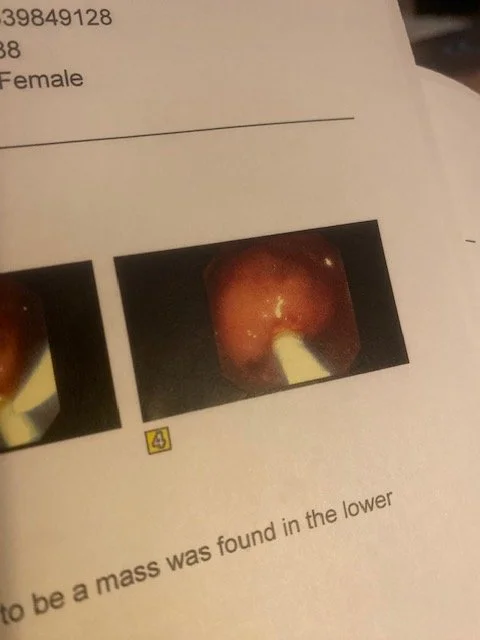
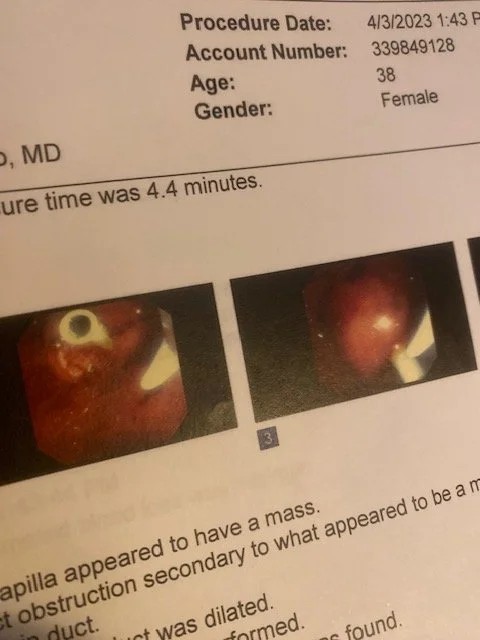
The ERCP didn’t just suggest a problem. It rang a church bell and passed the offering plate.
And then came the verdict:
A neuroendocrine tumor.
Sitting in the Ampulla of Vater like it paid rent there and planned to repaint. (The Ampulla of Vater is an extremely rare place for neuroendocrine tumors—less than 0.3% of gastrointestinal tumors and only about 2% of ampullary cancers.)
Suddenly, everything made sense—
The unbearable itching.
The jaundiced glow.
The bone-deep exhaustion that didn’t feel like “busy mom tired.”
The inability to eat.
During the procedure, they placed a stent so my bile could drain.
Translation: my body could finally stop acting like a poisoned lizard and my bilirubin could chill out.
And when those liver numbers drop after being sky-high?
It feels like winning a very small, very weird lottery.
The relief was unreal. Like someone drained the swamp out of my bloodstream and replaced it with fresh, clean river water.
I hadn’t felt that kind of internal quiet in a long time.
Then the doctor came in.
Y’all know I try to make a “happy” out of anything, and I was actually excited he was the one doing my procedure. I knew him from Hogs for a Cause—him and his team were famous for their cracklins.
So naturally, we were going to have to chat about that. 🙂
He was kind. Genuine. The kind of doctor who talks to you like you’re a human being—not a chart with legs.
I could tell he cared.
But my brain?
My brain was floating somewhere above the room.
I was groggy. Words came at me, but wouldn’t stick. Talking felt like trying to catch smoke with oven mitts.
I had questions stacked like unpaid bills:
Was it cancer?
Neuroendocrine… but was it the “okay” kind or the “oh hell no” kind?
He couldn’t tell me yet. It had to go to pathology.
He did say the tumor looked clear-ish and speckled pink… which could mean it was the “bad” kind.
But we weren’t going to talk about that yet.
What is the next step? Could they remove it? Would I need chemo? Radiation? Tell me something…
He didn’t know.
That was the answer.
Just… he didn’t know.
All I could think was:
Shit.
Because that meant I was going home again with nothing but waiting.
Everything had suddenly turned into a “next appointment” kind of answer.
That’s a hard thing to accept as a patient.
Even harder when the people who love you are just as scared—and now they’re stuck waiting too.
What he did know was this:
Yes, it was neuroendocrine.
Yes, it had to come out.
Yes, I needed a surgeon.
And yes—
I should pray I qualified for a Whipple.
No pressure or anything.
So I went home with a stent in my body… and static in my brain.
I did what anyone with Wi-Fi and fear would do: I researched like my life depended on it.
Because, well… it kind of did.
And everyone else did too.
The Facts They Hand You While You’re Still Reeling:
Neuroendocrine tumors are rare—about 6–7 people per 100,000 in the U.S. each year.
Not nonexistent… but rare enough that most people have never heard of them.
Tumors in the Ampulla of Vater?
Rarer still.
Some doctors go their entire careers without ever seeing one.
The Whipple procedure—pancreaticoduodenectomy—is one of the most complex abdominal surgeries performed. At high-volume centers, mortality rates sit around 1–3%.
That sounds small… until you realize you’re signing a consent form acknowledging you might not wake up.
Complication rates?
30–50%.
Flip a coin.
Pray for the good side.
The Internet Support Groups (AKA Fear With Wi-Fi)
I joined every neuroendocrine cancer group I could find. There aren’t many—but the ones that exist?
They are packed with facts, research, and the kind of brutally honest patient stories doctors don’t put in pamphlets.
Because if you’re facing a Whipple, you don’t want the brochure version.
You want the real-life, unfiltered truth from someone who has actually lived through it.
Reading those stories was terrifying.
The kind of terrifying that makes you wonder:
Is this a blessing… or a curse?
Because yes—the Whipple saves lives.
But life after?
That was a different story.
Still… I thought if I read enough, if I prepared enough, I could somehow brace myself for what was coming.
But one thing became crystal clear:
If I made it through this surgery… my life would never be the same again.
That was the only part I felt sure about.
By then, everyone knew I had cancer.
I couldn’t even go to the grocery store without running into someone and crying in aisle three—somewhere between canned beans and existential dread.
I was a mess.
Trying to do everything.
See everyone.
Be everything.
Before I maybe couldn’t anymore.
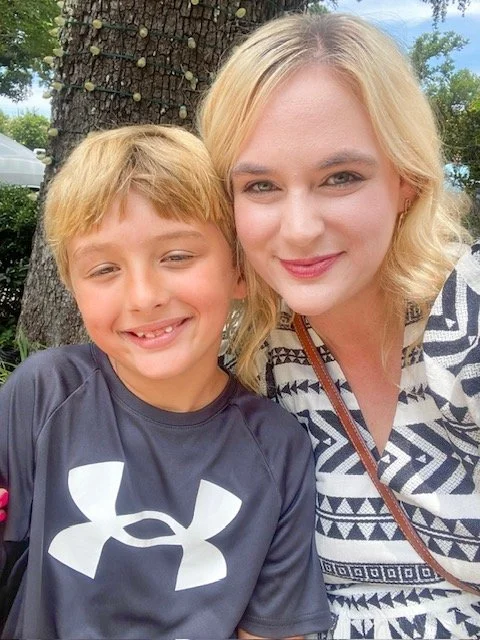
And my kids…
I was so grateful we homeschooled.
When I was getting sicker, struggling to keep up, I told my husband I was ready to put them in school.
They begged me not to change their life.
And I gave in.
Because deep down, I knew something else was about to change it anyway.
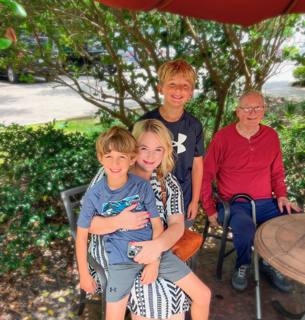
So, we made memories.
They kept their school routine.
And we ran the town as much as my body would allow.
And that?
That is something I would never change.
If you ever find yourself in that place, let me tell you something I wish someone had drilled into my stubborn skull:
Rest.
Be sick.
Let your body be sick.
It’s sad.
It’s frustrating.
It’s depressing.
But rest is healing.
And that is a lesson I learned the hard way—and one I still struggle with to this day.
Next Up: The Surgeon
The man who would either cut the cancer out of me… or confirm that it had already rewritten the rest of my life.
Either way— somewhere between that first bell and the next…
I realized I wasn’t waiting for answers anymore—
I was waiting to find out who I’d have to become… if I survived.